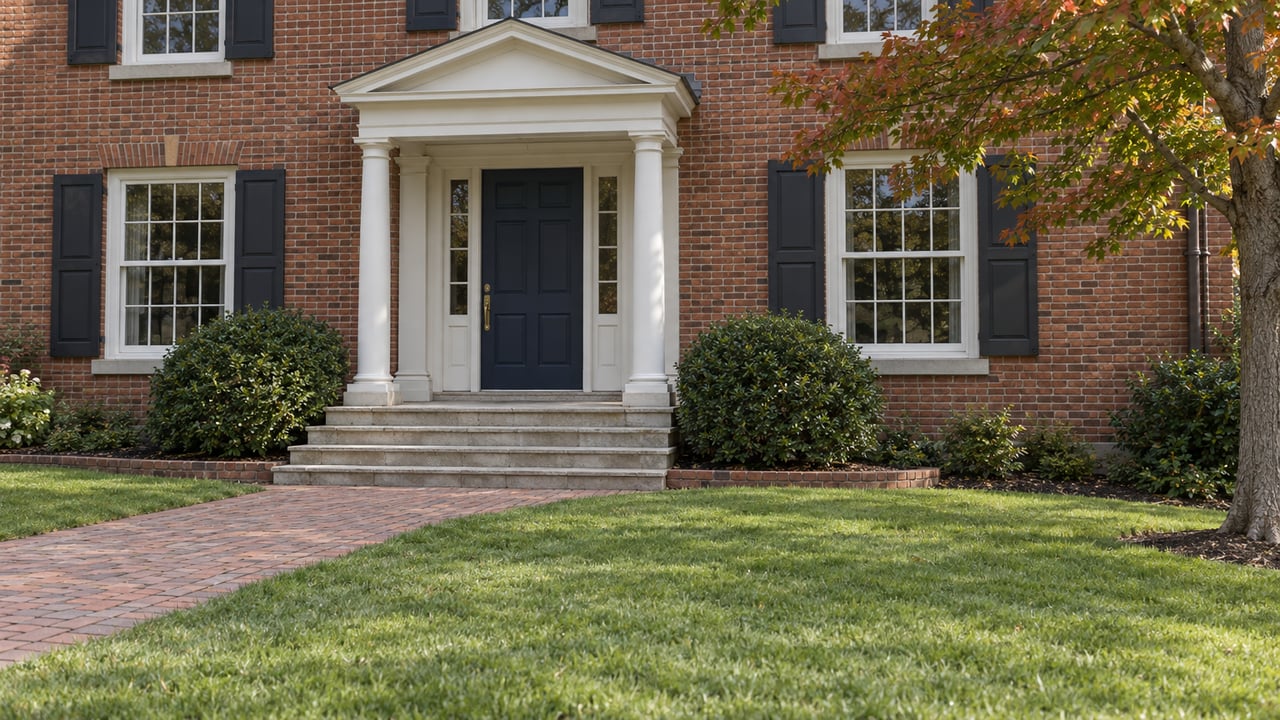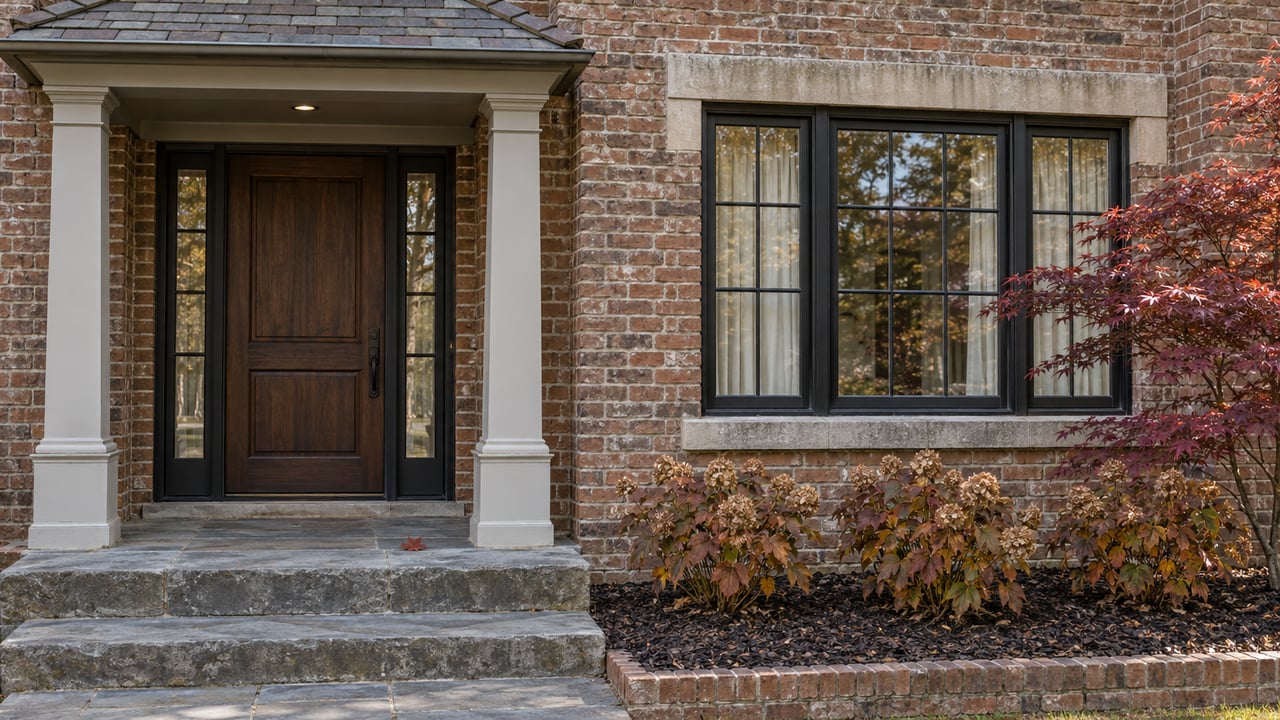
In late May 2025, a new duplex at 2129 N. Troy Street in North Highlands opened for showings with a list price of $1,795,000 for 2,470 square feet. It had another feature most new construction doesn't have. A court had required projects built under Arlington's Expanded Housing Option to record a notice in the land records about their legal status, and ARLnow reported that the requirement covered the Troy Street project.
The notice spoke directly to buyers:
"To potential purchasers, please be advised that a lawsuit is on appeal to the Court of Appeals of Virginia and then perhaps to the Supreme Court of Virginia that may void your zoning rights to this property and may result in your right to live in this property being eliminated."
The home sold in March 2026 for $1,610,000, about 10% below that first asking price. No public record says how much of that gap came from the notice. Still, the notice is the best way to understand Arlington's "missing middle" market. The lawsuit did more than cast a cloud over the zoning. It decided which homes got built, how many, and in what form. So the handful of sales so far tell you more about legal risk than about what the zoning was designed to produce.
How a Court Notice Ended Up Shaping Supply
The Expanded Housing Option, or EHO, was adopted in March 2023. It lets owners build two to six homes on lots that had been limited to one detached house. On September 27, 2024, Arlington Circuit Court struck down the amendments. The County voided the EHO permits it had issued and stopped reviewing new ones. A month later, the judge issued a partial conditional stay for permits that had already been approved.
That stay created the choice every permit holder had to make. In April 2025, ARLnow found that at least 16 of 45 approved EHO projects had applied to switch to single-family development. Only three had kept going under EHO by recording the required legal-risk notice. The paper also reported the trial judge's warning that building a four- or six-plex while the case was pending was a major risk.
Builders who could build a large detached house on the same lot mostly did. The County's March 2026 EHO data report, which covers activity through December 31, 2025, shows the result:
| EHO activity, July 2023 to December 2025 | Count |
|---|---|
| Properties with approved EHO zoning permits | 47 |
| Housing units approved | 190 |
| Net new units after subtracting the houses replaced | 132 |
| Units completed | 6 |
| Units under construction | 21 |
| Units that won't be built because the owner switched to a single detached house | 57 |
| Permit holders who switched to single detached | 15 |
That leaves about 106 approved units in limbo. The County says their status is uncertain. The report also names "reluctance of applicants to proceed with construction due to litigation" as the first reason building permits stayed scarce.
Why the Finished Homes Are the Smallest Formats
The ordinance allows up to six units, and the most common approved type is multifamily. All three completed developments are two-unit buildings. The County's own list of extra steps helps explain why. Semidetached homes and townhouses need subdivision plat approval. Projects with four or more units fall under the commercial building code, which the County notes is a learning curve for builders used to residential work.
Every extra step adds time while a lawsuit is pending. So the projects that reached completion were the ones with the shortest path to a certificate of occupancy and the least capital tied up. That matters for comparisons. When a buyer looks at what Arlington's missing middle homes have sold for, they're seeing the cautious end of what the zoning allows, built during the riskiest stretch of the case.
Even so, these homes differ from the new houses around them. Through December 2025, the most common EHO unit size was three bedrooms, with 86 approved, and new single detached homes had none at that size. The average EHO unit is 1,649 square feet. The average new single detached home is 5,348. Location is distinctive too. The County found that 79% of approved EHO permits are within three-quarters of a mile of a Metro station or half a mile of a premium transit stop on the Columbia Pike or Richmond Highway corridors.
What the First Sales Can and Cannot Tell You
With so few homes finished, the price record is short:
| Property or measure | Figure | Source and timing |
|---|---|---|
| 2129 N. Troy St., North Highlands | Listed at $1,795,000 | ARLnow, May 2025 |
| 2129 N. Troy St. | Sold for $1,610,000 | ARLnow, sale in March 2026 |
| Neighboring 2127 N. Troy St. | Sold for $1,615,000 | ARLnow, sale in December |
| 5041 and 5043 25th St. S., Claremont | Sold for about $1.2 million | ARLnow, August 2026, citing property records |
| First EHO sale counted by the County | About $1.6 million, 45% below the average new single detached home in 22201 | County report, through December 2025 |
| Completed but unsold EHO units | 2026 assessments of $966,800 in 22206 to $1.4 million in 22201 | County report |
| New single detached homes | 2026 assessments of $1.3 million to $4.3 million, $2.4 million average | County report |
The County describes its first recorded sale as a four-bedroom semidetached unit in 22201. ARLnow describes the 2127 N. Troy sale as a four-bedroom home. Public reporting hasn't confirmed whether 2127 and 2129 are the two halves of one building. If they are, those two Troy Street prices are two halves of one duplex pricing alike. They aren't a missing middle home measured against a detached house. Bedroom counts for 2129 also differ between ARLnow's 2025 and 2026 stories.
The defensible conclusion is narrower than either side of the policy debate tends to claim. The one sale the County measured came in well below new detached construction in 22201. Completed EHO units are assessed for 2026 at $966,800 to $1.4 million, against a $2.4 million average for newly built detached homes across the County's dataset. The prices are still well above what "middle" suggests to most buyers. When the Troy Street duplex was listed, ARLnow noted that it cost more than most Arlington homes but less than most new single-family development. The County says its data still tells "a partial story," because most of it comes from permits, not completed homes.
Two other things are mixed into these prices: the small number of homes for sale and the legal risk. Fewer than ten finished homes give appraisers and buyers very little to compare against. And a recorded notice warning that the right to live in the home could be eliminated is the kind of term that shows up in negotiations, even if no one can isolate its dollar value from public data.
Where the Case Stands in October 2026
The legal picture has changed several times, and the current status turns on procedure rather than the merits:
- September 5, 2025: On rehearing, the Virginia Court of Appeals reversed the circuit court and sent the case back so EHO developer Wilsons Ventures could be joined. The ruling dealt with who must be a party to the case, not whether the ordinance is valid.
- October 1, 2025: The County began accepting and reviewing EHO applications again.
- April 2026: ARLnow reported nine more approved projects totaling 40 units since the appeals rulings, and 59 EHO projects on the County's dashboard. Some of those projects have since switched to single-family construction.
- May 19, 2026: The Supreme Court of Virginia agreed to review the plaintiffs' appeal on the developer-participation question. Arlington County says the appeal doesn't reach the merits, development hasn't been halted, and staff can't deny an application that meets every zoning requirement.
- July 21, 2026: Board member Susan Cunningham proposed an initiating resolution on the EHO caps. She said she expected it would likely not move forward that day, and she described the conversation as four to 12 months away.
- August 5, 2026: ARLnow reported that Supreme Court arguments were expected this fall. Developer J. Alex Wilson's attorney had told the court he wouldn't file a response brief or argue further.
As of the latest reporting reviewed here, no argument date or decision has been published.
The caps matter for supply whatever the court does. The County's EHO FAQ lists annual limits of 7 permits in R-5, 30 in R-6, and 21 combined in R-8, R-10 and R-20, for 58 in total, in effect through June 30, 2028. ARLnow's July coverage called those caps "expiring," and any change would come through the zoning amendment process Cunningham's proposal was meant to start.
Short Answers to Common Questions
Is the missing middle zoning in effect in Arlington right now? The County is administering the 2023 ordinance and issuing permits. The Supreme Court of Virginia is reviewing a procedural appeal, and the County says that review didn't halt development.
Do all EHO homes carry the lawsuit notice? ARLnow's 2025 reporting describes the notice requirement for projects that went ahead while the circuit court ruling stood. Public reporting reviewed here doesn't say whether permits issued after October 2025 carry the same notice. That's the kind of detail that shows up in a property's own recorded documents.
Are Arlington's missing middle homes cheaper than single-family homes? The County's first recorded sale, in 22201, came in 45% below the average newly built detached home in that ZIP code. Reported sales through August 2026 run from about $1.2 million for the Claremont units on 25th Street S. to $1.61 million for 2129 N. Troy Street.
Why were so few built? The County cites builders' reluctance during the litigation, extra permitting steps, and commercial building code requirements for buildings with four or more units. Through December 2025, 15 permit holders built single detached houses instead.
If you're considering an EHO home in Arlington, or wondering whether your own lot is worth more as an EHO project or as a detached house, Sheehan Team can go through the recorded documents, the comparable sales that exist, and the construction details with you before you commit. The record is still thin, and careful preparation counts for more when it is. Work With Us.
This article is general information, not legal, tax or financial advice. Consult a qualified professional about your situation.