Pull up three real estate sites in the same afternoon and search "McLean VA home prices." You will get three different answers, and none of them are wrong.
As of July 31, 2026, Zillow's home value index put the typical McLean house at $1,472,788, up a modest 1.4 percent over the year. Around the same time, Redfin's June 2026 update showed the average McLean sale price at $2.08 million, up 38.3 percent year over year. Zoom into Redfin's trailing three months of closed sales through May 2026 and the median lands at $1.9 million, up 9.7 percent, with price per square foot at $466, up 7.7 percent.
That is not a rounding error. That is three tools measuring three different things, and in a market as small and lopsided as McLean, the gap between them tells you more about the neighborhood than any single figure could.
Why the Same Zip Code Produces Three Truths
Zillow's index is built to smooth out the noise. It tracks how individual homes change in estimated value month over month, which is why it barely moved this year even as headline sale prices jumped. Redfin's average and median, by contrast, are built from whatever actually closed. When only 181 homes sold in McLean in May 2026, the same count as May 2025, a handful of high-end closings can drag the average up without a single "typical" house getting more valuable.
That is the mechanism behind the 38 percent jump in average sale price. It is almost certainly not that every McLean home suddenly became worth a third more. It is that the mix of what sold shifted toward the expensive end. A few multimillion dollar closings on large lots can outweigh dozens of moderate sales in a month with this few transactions, the way one very large donor can swing an average gift size even if most donors gave the usual amount.
For a buyer or seller, that distinction matters. If you're pricing off Zillow's typical value, you are underestimating what it currently takes to win a home in McLean's more competitive segments. If you're pricing off Redfin's average, you may be assuming McLean got dramatically more expensive across the board when really the top tier got busier. Neither number is dishonest. Both are incomplete on their own.
McLean Is Not One Housing Market
The real reason these numbers diverge is structural. McLean's inventory spans several genuinely different products, each with its own pricing logic, and a single median flattens all of them into one line.
- Langley, on the west side of McLean, is defined by large custom homes on lots that run from roughly one acre to several acres or more. Here, land and privacy carry the price, not proximity to anything.
- Broyhill Estates, sometimes listed as Broyhill Langley Estates, has become a redevelopment corridor. Older homes on these lots are increasingly evaluated by builders as land plays rather than as finished houses. The zoning and the buildable footprint often matter more to a buyer's math than the kitchen.
- Homes near Lewinsville, closer to the McLean-Tysons corridor, trade on walkability and convenience rather than acreage, commanding a premium for being close to retail and the area's growing urban edge.
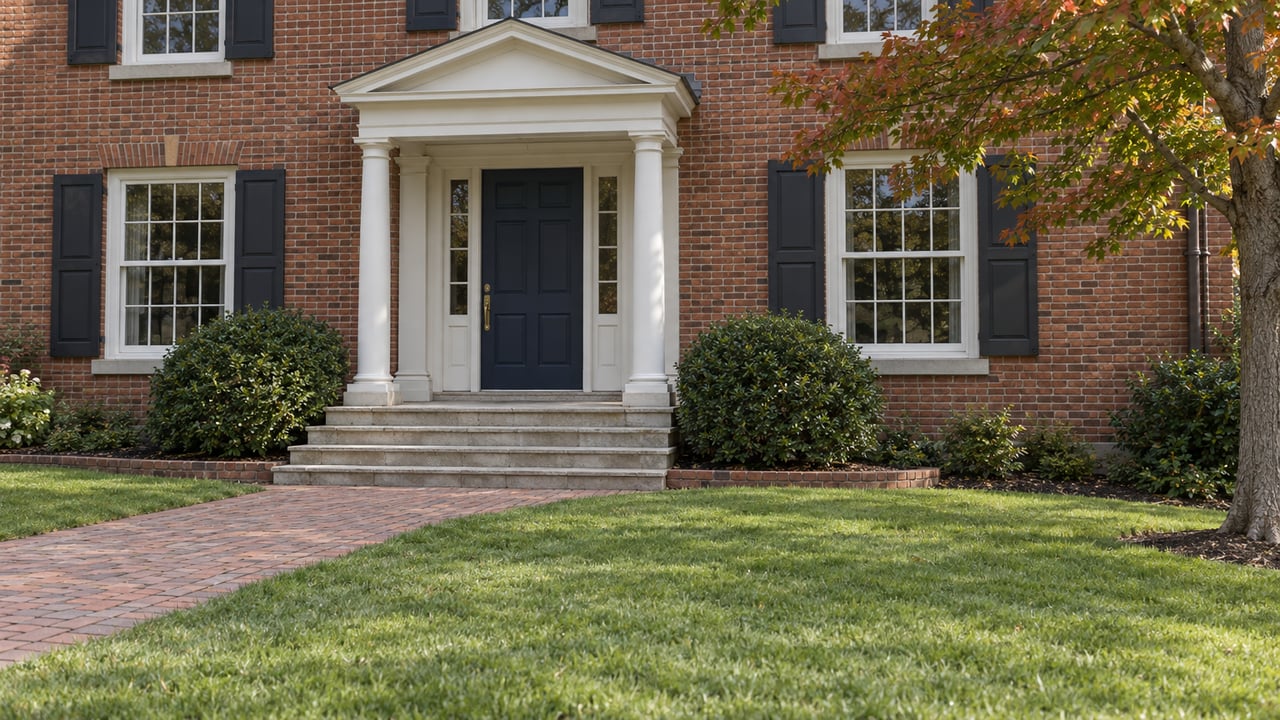
- Established single-family neighborhoods like Chesterbrook, Franklin Park, and Salona Village make up the middle of the market, the closest thing McLean has to a conventional single-family housing tier.
- Townhomes, generally priced from $700,000 to $1.2 million, sit at the accessible end of ownership in a ZIP code where that phrase is relative.
- Across these submarkets, most true new construction in McLean today is a teardown rebuild, priced above $2 million once the old structure comes down and a new one goes up.
Layer the two ZIP codes on top of that and the picture gets sharper still. 22101 covers downtown McLean, Langley, and the corridor along Chain Bridge Road and Old Dominion Drive, oriented toward Arlington and DC. 22102 leans toward Tysons, with larger planned communities, luxury condos, and easier access to the Dulles Toll Road, Route 7, and the Silver Line. Two buyers searching "McLean" can end up shopping entirely different commutes, lot sizes, and price logic without realizing it.
None of this shows up in a single median. It shows up when you ask which McLean you're actually looking at.
What This Means If You're Shopping
If you're comparing McLean to a neighboring town, the median is a reasonable starting point for a gut check and nothing more. The more useful question is which of the five submarkets above your search actually falls into, because the pricing rules are different in each.
Shopping a teardown lot in Broyhill Estates means your comp set is other lots, not other finished houses. Shopping a colonial in Chesterbrook means recent renovation quality and lot orientation will move the number more than square footage alone. Shopping a townhome means you're competing in the segment where $700,000 to $1.2 million is the going range, a tier where the county's overall median tells you almost nothing.
Price per square foot is the more honest yardstick here, and Redfin's $466 figure for the trailing three months through May 2026 is a fair regional anchor. But even that number should be checked within the specific submarket, not applied blindly across a ZIP code that includes both half-acre teardown lots and stacked luxury condos near the Silver Line.
What This Means If You're Selling
If you're on the selling side, the same fragmentation cuts the other way. A seller in Langley pricing off Redfin's average risks anchoring too high, because that average is being pulled upward by trophy sales that may have nothing to do with a comparable Langley listing. A seller of an older home in Broyhill Estates who prices as if selling a finished house, rather than acknowledging that buyers may see the lot as the asset, can leave real money on the table or scare off the exact buyer most likely to close quickly.
With only 181 closings in a typical month, McLean does not have the sales volume to smooth out an unusual comp the way a larger market would. A single unusual sale two doors down can distort what a well-meaning agent or algorithm tells you your home is worth. Recent, truly comparable closings inside your specific pocket of McLean carry more weight here than in almost any other Northern Virginia market we track.
A Few Questions Worth Asking Before You Trust Any Number
Why did the average sale price jump 38 percent when the typical home value barely moved? Because those are two different measurements. The average reflects whatever mix of homes actually closed in a given month, and McLean's small transaction count means a few high-end sales can pull that average up sharply. The typical value figure is designed to smooth for exactly that kind of swing.
Is McLean currently a buyer's market or a seller's market? Redfin describes the overall market as competitive, with homes drawing multiple offers and moving in roughly 19 days on average over the three months through May 2026, down from 26 days the year before. That competitiveness is not evenly distributed across the five submarkets described above, so the honest answer depends on which segment you're in.
Should I compare McLean to Great Falls using the same median figure? Only loosely. Great Falls tends to trade more on acreage and privacy across the board, while McLean's median reflects a mix of acreage estates, teardown lots, walkable convenience homes, and townhomes. A neighborhood-level comparison inside each town will tell you more than stacking two headline medians against each other.
McLean rewards buyers and sellers who read past the headline number, and it punishes the ones who don't. If you want help figuring out which McLean you're actually pricing, whether that means a teardown lot in Broyhill Estates, a colonial in Chesterbrook, or a walkable rebuild near Lewinsville, the team at Sheehan Team has spent years working these specific streets and can walk you through what the comps actually show. Work With Us.